
Fairywrens in full color
Fairywrens! We have a magnificent trifecta here on Raakajilm.
Splendid Fairywren
The bright blue one is a Splendid Fairywren - bold and bossy. Noisy. Always chasing other males around. He might accidentally land on your hat. Check out the “face-fan” display. Apparently this flaring of the iridescent blue ear tufts is a sexual or aggressive display ... yeah-nah not so scary ...


Purple-backed Fairywren
The red shouldered feller is a Purple-backed Fairywren - shy but curious. He will nearly, but not quite, come out of the depths of the bushes to see what the funny squeaking noise is that you're making with your mouth. Fairywrens seem to be a bit like orchids: beautiful but a taxonomic nightmare. In 2018, what we knew as a Variegated Fairywren was split off and are now only found east of the Dividing Range. Our ex-Variegated are now called Purple-backed, which is odd because they don’t really have a purple back ...

Purple-backed Fairywren
White-winged Fairywren
The White-winged Fairywren - shy and cheeky. He'll flash his white wings from a great distance but always stay just ahead of you and out of range for a good photo. He entices you to follow him and before you know it you've been out there for hours and you've missed lunch.


Identifying Fairywrens
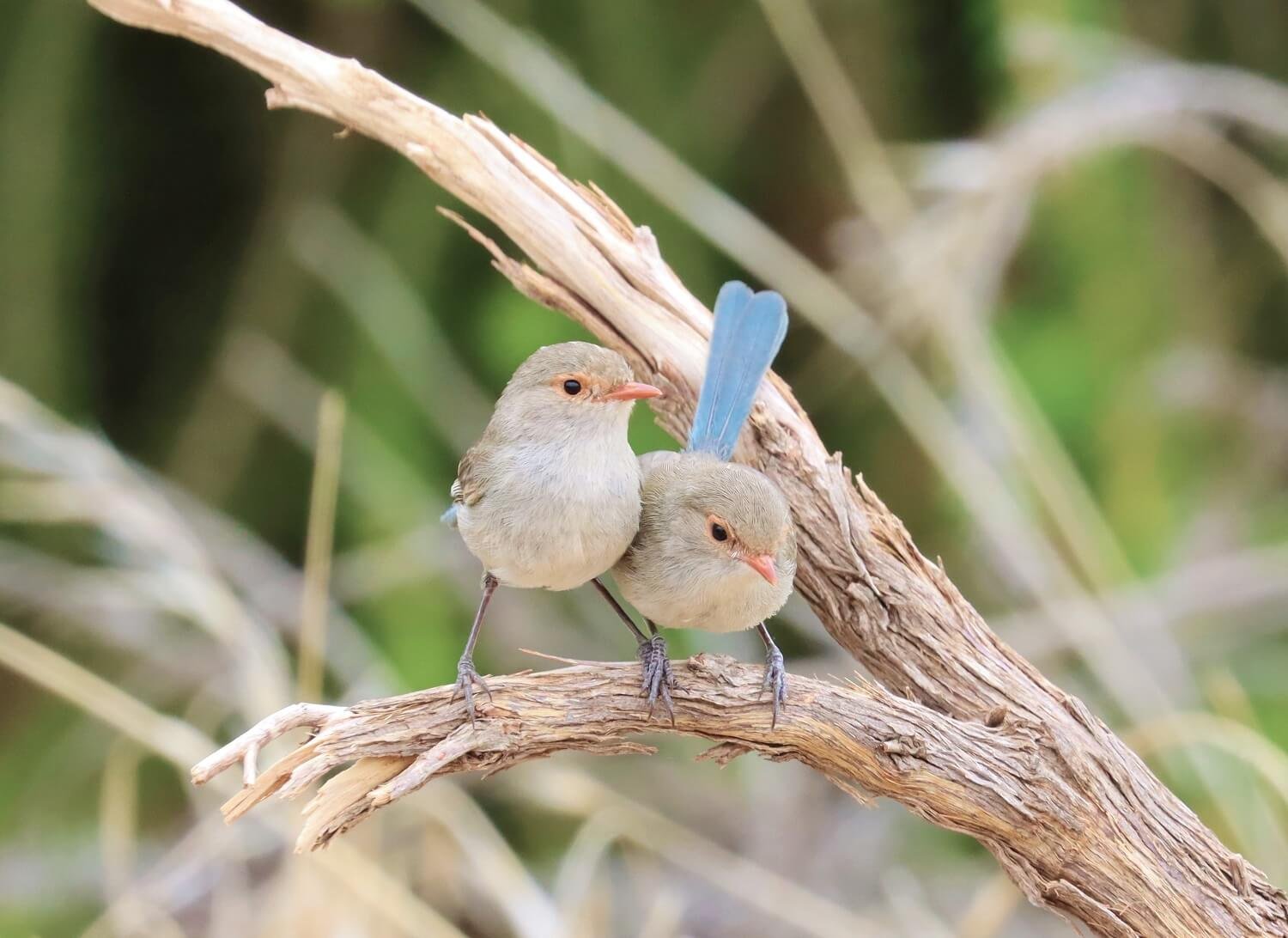
All these photos are of males in breeding plumage. Apparently, some of the older Fairywren males manage to keep their colors year-round. However, there’s also “eclipse” plumage - the winter or non-breeding plumage when males look deceptively like females. Here’s some tips for distinguishing eclipse males from females:
Splendid Fairywren - Females have light rufous-brown eye-ring and lores (feathers between the eye and beak), and a beak of similar color. Eclipse males have black lores and a black beak with bluish wings. Both have dull turquoise tails.
Purple-backed Fairywren - Again, looking for the black lores and black beak of the eclipse males. The females have dark rufous lores and eye-ring extending from a slightly lighter rufous bill. Both have blue-black tails.
White-winged Fairywrens, it’s rarely possible to distinguish between males in dull/eclipse plumage, females, and juveniles with fully-grown tails. Sorry!

You can participate in fairywren research
Do you see fairywrens? The Fairy-wren Projectis looking for citizen scientist partners across Australia to help collect observations of fairywrens and their plumages. Whether you're a serious twitcher or enjoy seeing fairywrens in your garden, your observations help!
When you see fairywrens, submit an eBird checklist including how many individuals of each plumage type you see in the species comments.
First published August 9 2020, revised March 2022