
Prong-snouted Blind Snake
I love this snake.
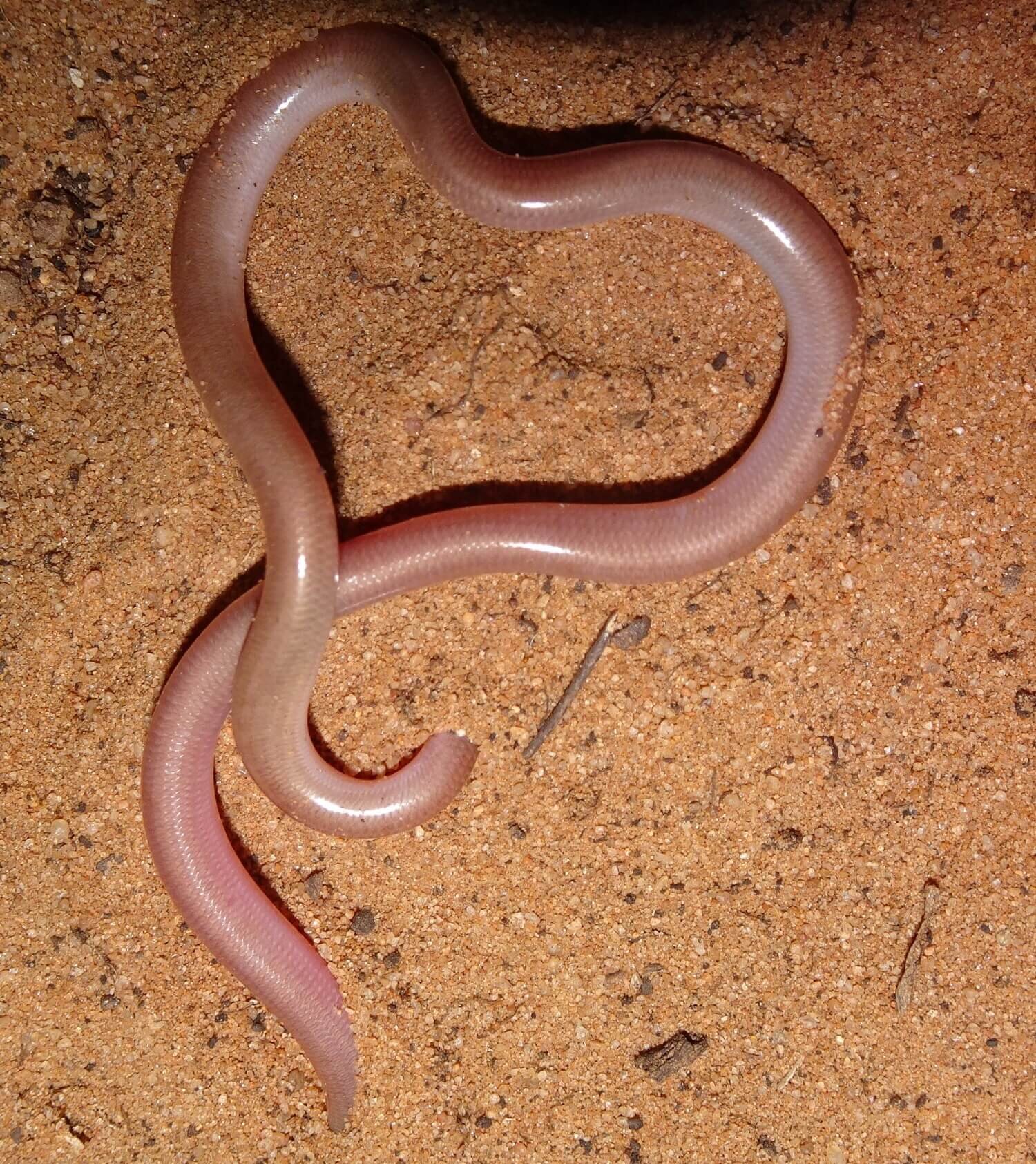
Prong-snouted Blind Snake (Anilios bituberculatus) is about 45cm long.
Many years ago, I was researching the diet of feral cats and foxes in the Mallee and I found the remains of one of these inside a cat’s stomach. Living in Melbourne, it was my first experience of a non-venomous and completely harmless snake.
Prong-snouted Blind Snake (Anilios bituberculatus) is not considered threatened, but like the other Blind Snake in the Mallee (Dark-spined Blind Snake: A. bicolor), it is secretive and rarely seen. They are burrowing snakes so are usually only above-ground at night during summer rainstorms. We were surprised to find this one on a dry (although warm and a bit humid) night at the start of October.
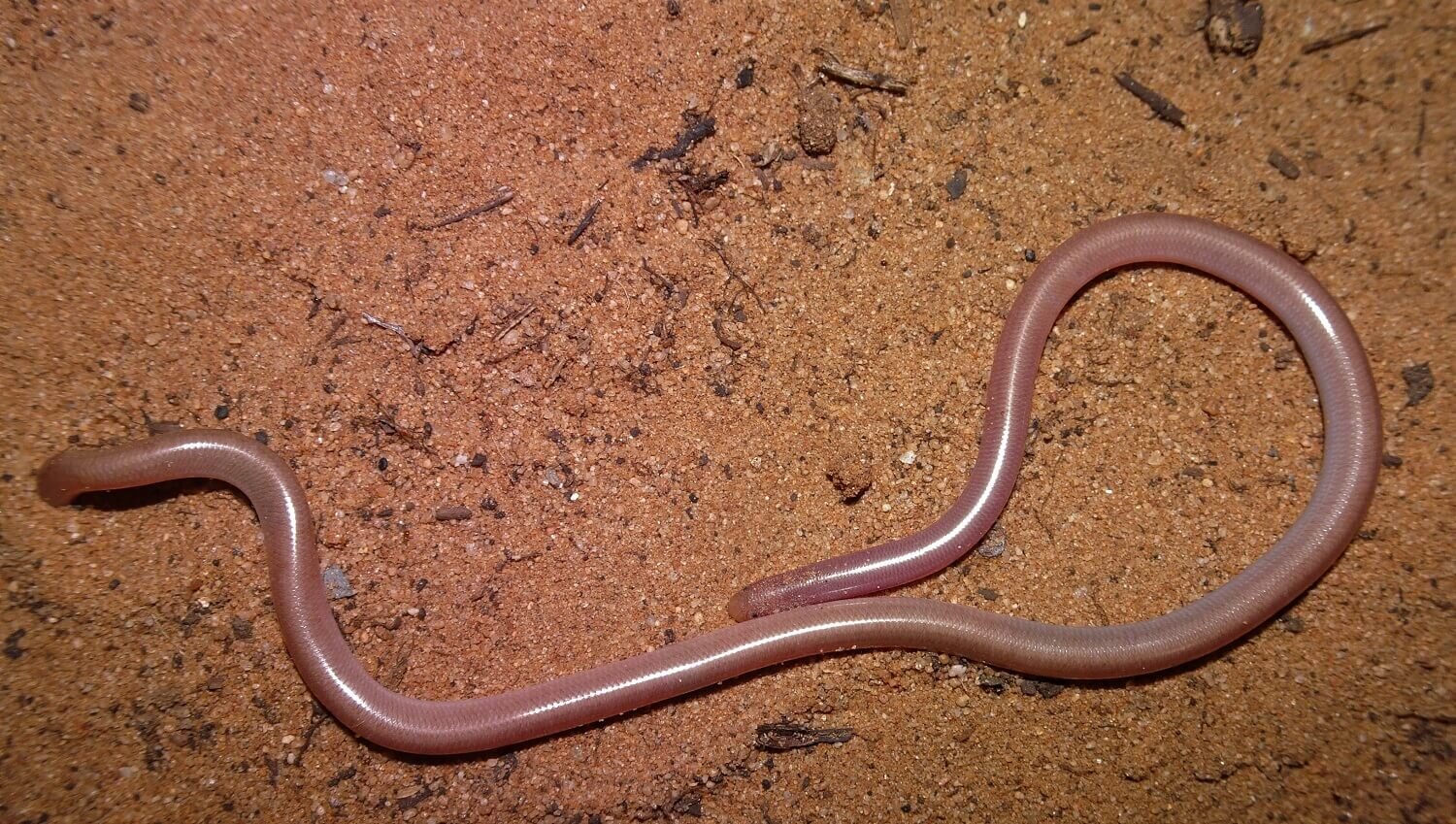
Look closely for the tri-lobed snout and tiny eyes, covered with a transparent scale.
After posing for photographs, this one slithered along the surface until it found an ants nest. I was amazed at how quickly it disappeared into the sand of the nest. It’s a predator of ants and termites so I guess that ant colony wouldn’t have slept well.

A twisted Blind Snake, hard to tell which end is which.
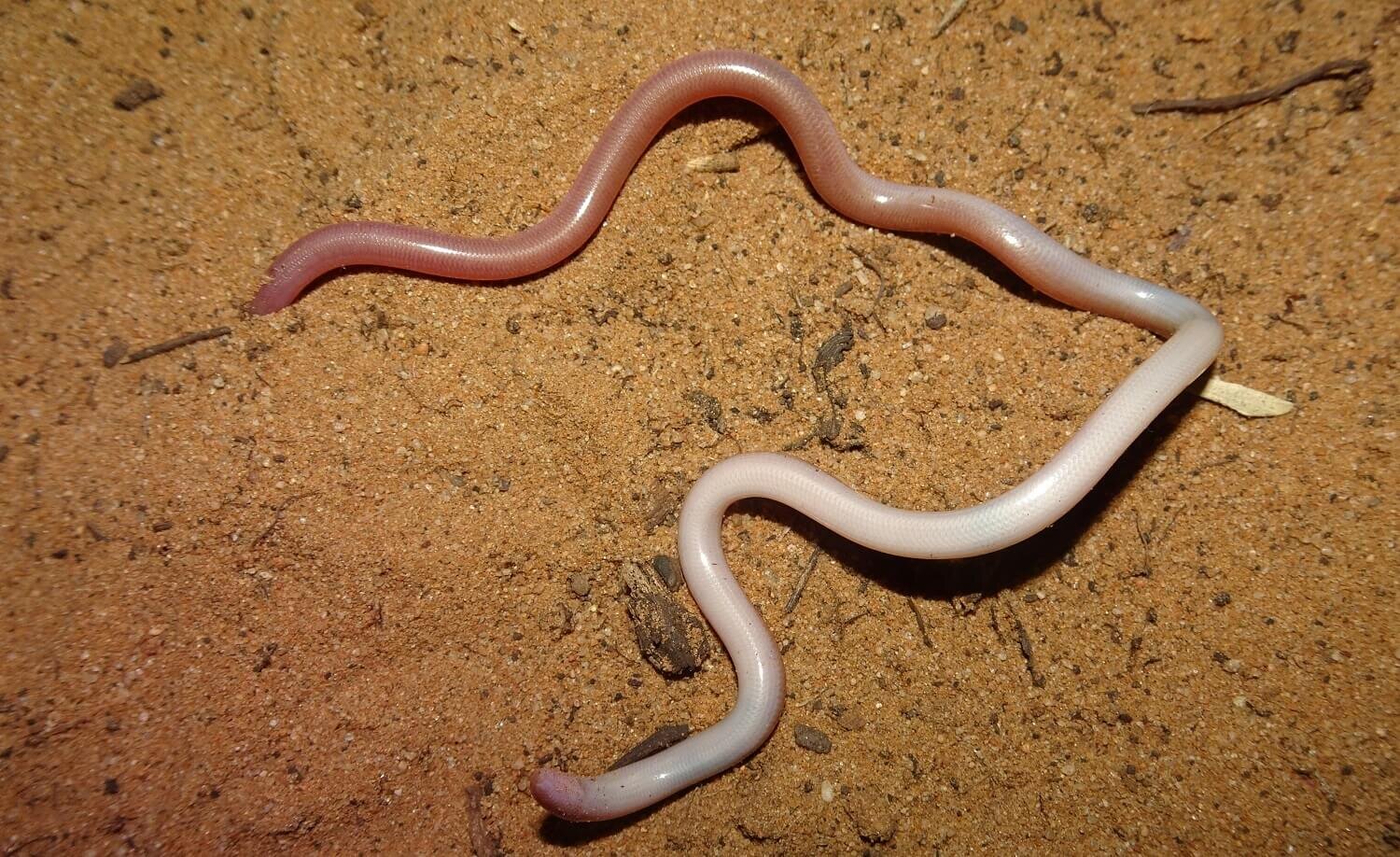
Showing the pinkish-white under surface and the short, conical spine on the tip of the tail.
The features to look for (if you’re not into counting scales) are the tri-lobed snout which distinguishes it from the rounded snout of the Dark-spined Blind Snake. Both species have a spine on the end of the tail and, you guessed it, the spine of the Dark-spined Blind Snake is dark in color, whereas the Prong-snouted Blind Snake has a pinky-brown conical spine, the same color as the body.
First published 4 October 2020