Introducing the Mallee Looper
The Mallee Looper caterpillars are eating their way through thousands of hectares of Mallee Eucalypts. Learn about Loopers and what you can do.
It takes a lot to kill a Mallee tree. Several years in fact. But that is just what the Mallee Looper caterpillar is doing.
You can help us unravel the causes and effects of the Mallee Looper outbreak by assisting with monitoring, hosting a moth trap (November), or looking out for caterpillars and damage (January onwards).
Please contribute observations of Mallee Looper caterpillars or moths to this iNat project https://inaturalist.ala.org.au/projects/looking-for-mallee-loopers
Factsheets
Research updates
Just when we thought the Mallee trees had escaped being eaten by very hungry Mallee Looper caterpillars …
Word has come from South Australian Looper-watching volunteers, that during mid-March there was a massive, out-of-season emergence of moths. Does this mean late damage to our Mallee trees?
From recent moth trapping, egg laying and caterpillar rearing we were expecting high numbers of hungry Mallee Looper caterpillars eating the leaves from Mallee Eucalypt trees in January. This did not happen. Hooray!
We’ve been rearing Mallee Looper caterpillars in the office.
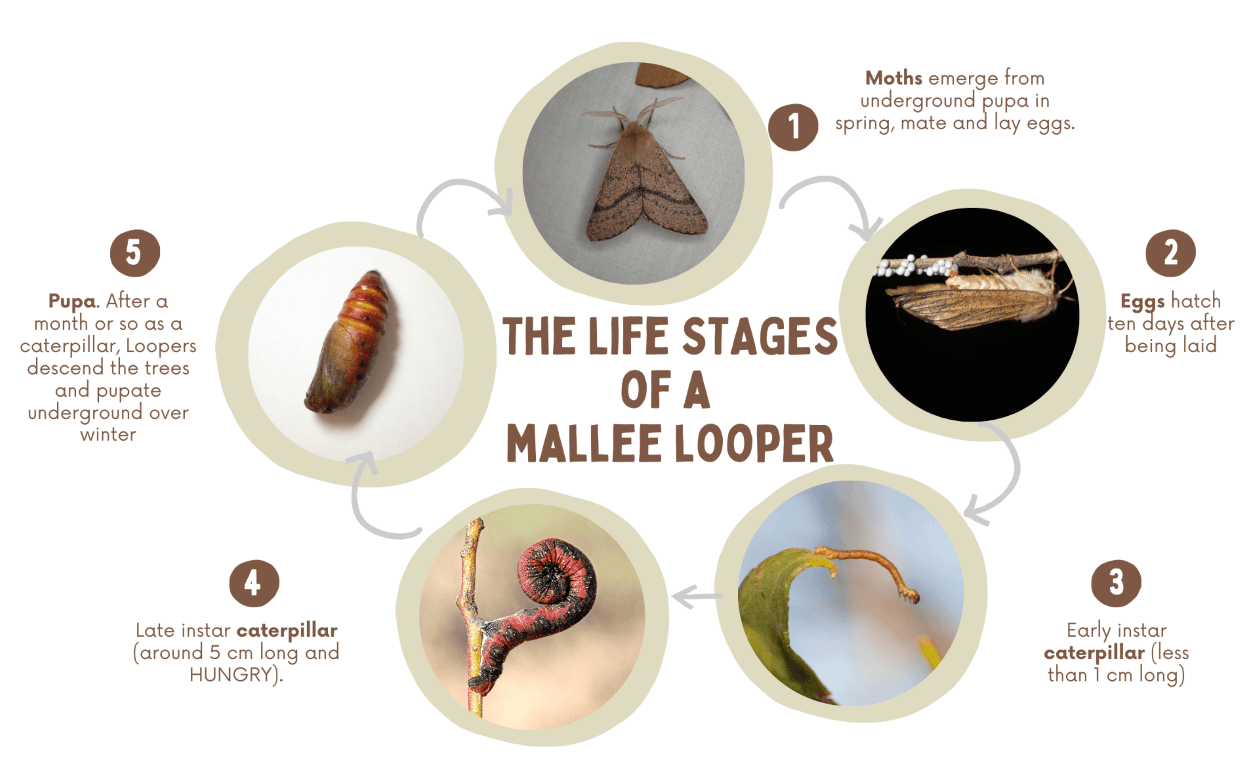
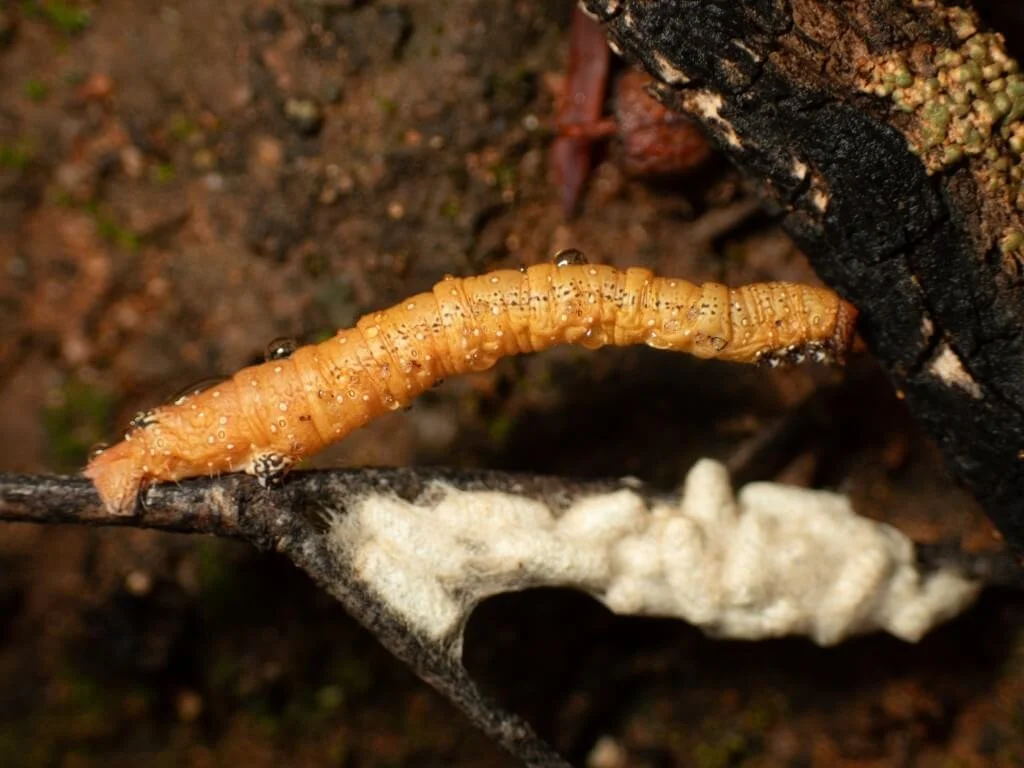
After caterpillars hatch from the egg they spend about a month growing and eating. From about 20 days old they are in the “very hungry” stage where most defoliation of trees occurs.
We also witnessed the alien-stage as the caterpilla becomes a pupa.
How many eggs does a Mallee Looper moth lay? (Spoiler: a lot) Moths lay their eggs high in trees. From this exposed location the tiny caterpillars “balloon” away from the egg mass on silken threads.
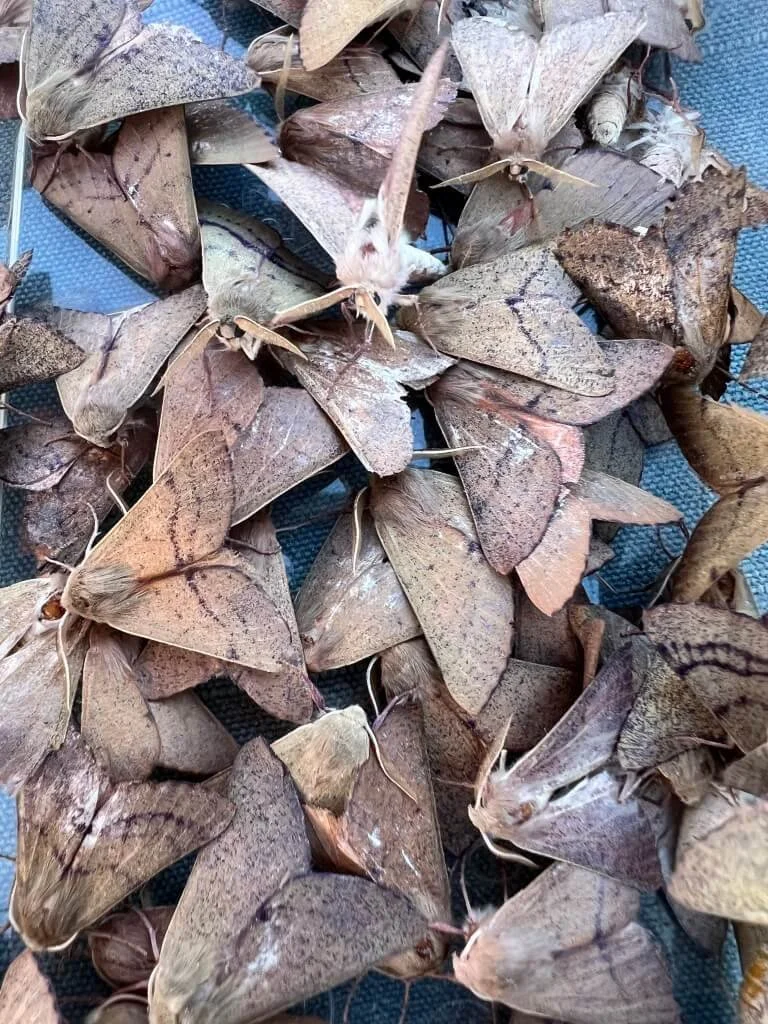
For the first time, we have an understanding of the abundance of Mallee Looper moths in outbreak sites in the Victorian Mallee. What a trapping season it was!
Moth trapping for research sometimes involves killing everything in the trap. Here’s how I successfully avoided that approach.
The Mallee Looper moths have emerged from their underground pupae. Moth trapping is in full swing!
Read on for an overview of our research project exploring the outbreak of Mallee Looper caterpillars in the Victorian Mallee.
This project of the Regional Drought Resilience Planning program is jointly funded through the Australian Government’s Future Drought Fund, the Victoria Government and the Natural Resources Conservation Trust. Research is led by Wildlife Unlimited, in partnership with Mallee Conservation.