
Can “no-kill” moth trapping be used for research?
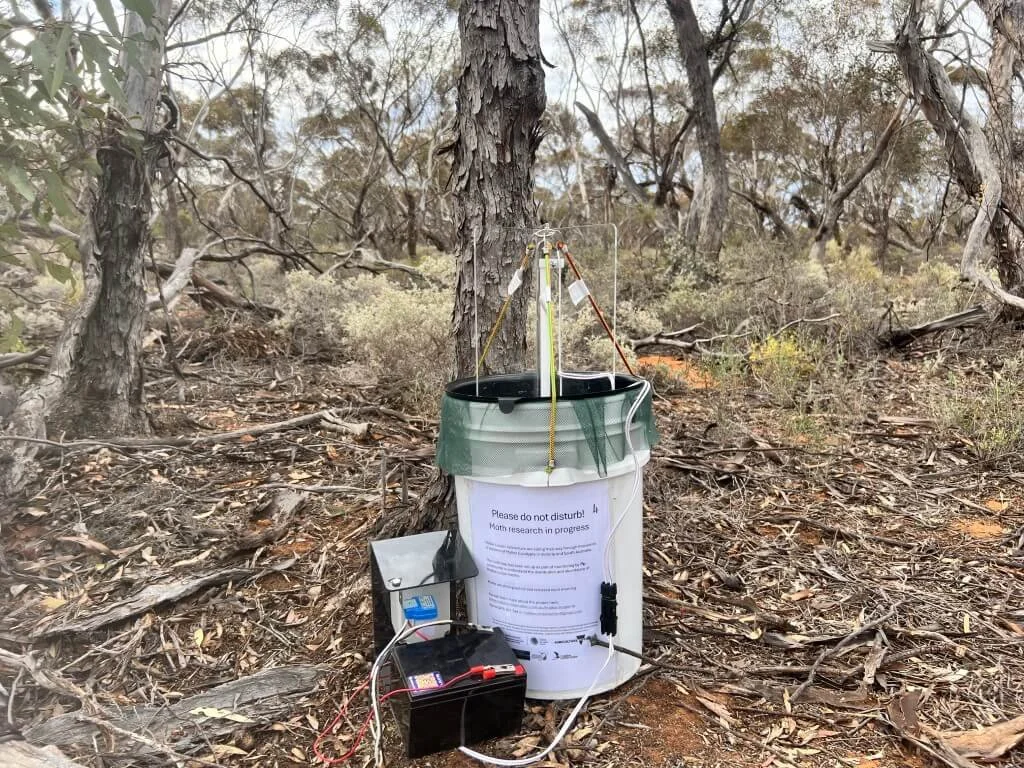
The funnel trap I used for trapping moths. The blue thing is a light activated switch that switches the light on at dusk, and off at dawn.
Moth funnel traps
A funnel trap for moths is basically a bucket with a funnel, transparent vanes and a moth-attracting light. The moths are attracted to the light and are directed by the vanes to fall through the funnel. They are then trapped in the bucket overnight.
Sometimes, researchers use a kill fluid like Tetrachloroethylene to kill all the moths and other insects that enter the trap. This keeps the insects in good condition for research and identification because they don’t fly around battering and damaging themselves, or get eaten by beetles also captured in the trap. However, I did not want to kill everything indiscriminately in the course of my research. So I made several modifications to the moth trap so I could research my target Mallee Looper (Arhodia sp.) moths, and release any bycatch.
Did it work? Yes it did.
How to stop the moths battering themselves inside the trap overnight?
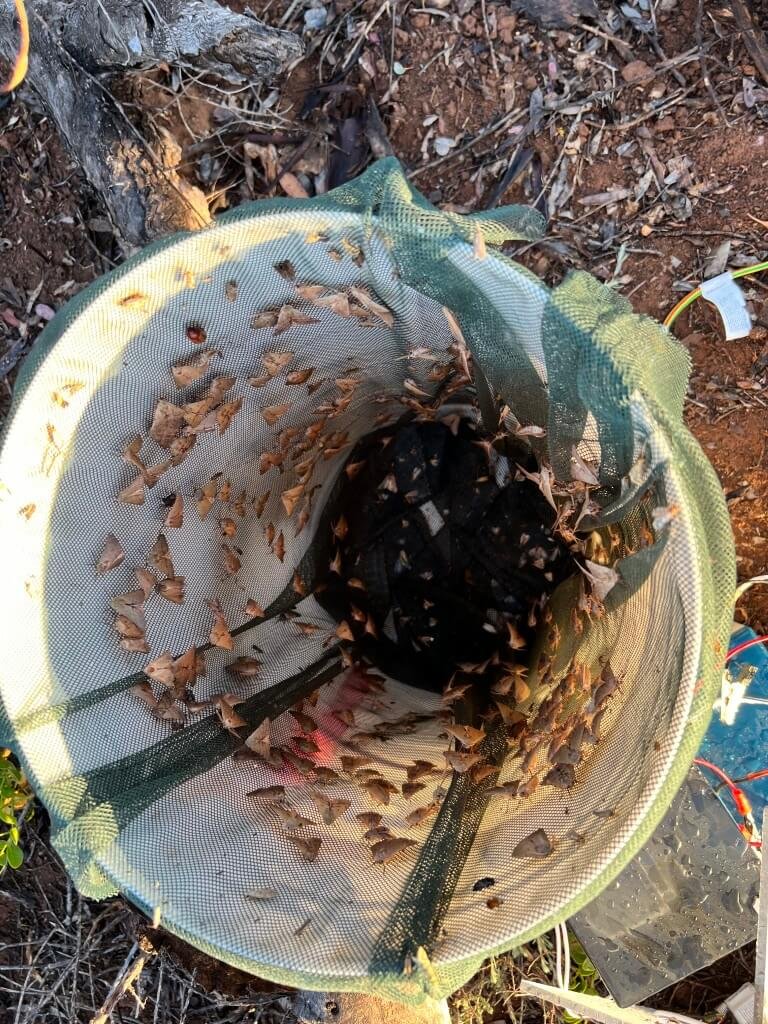
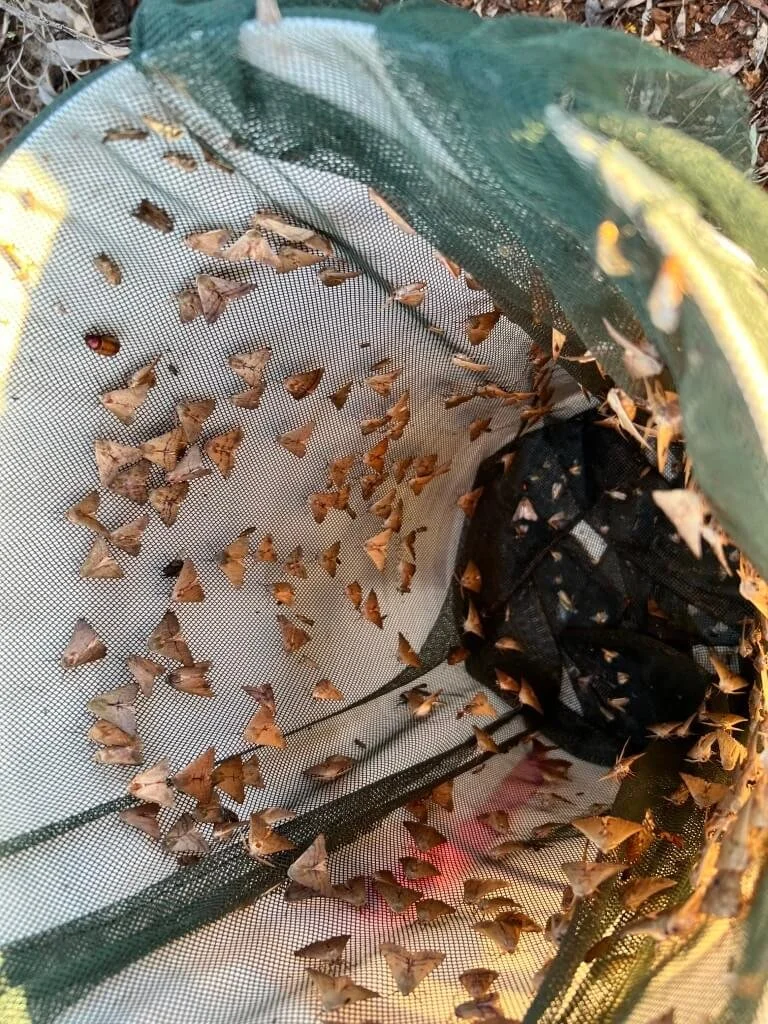
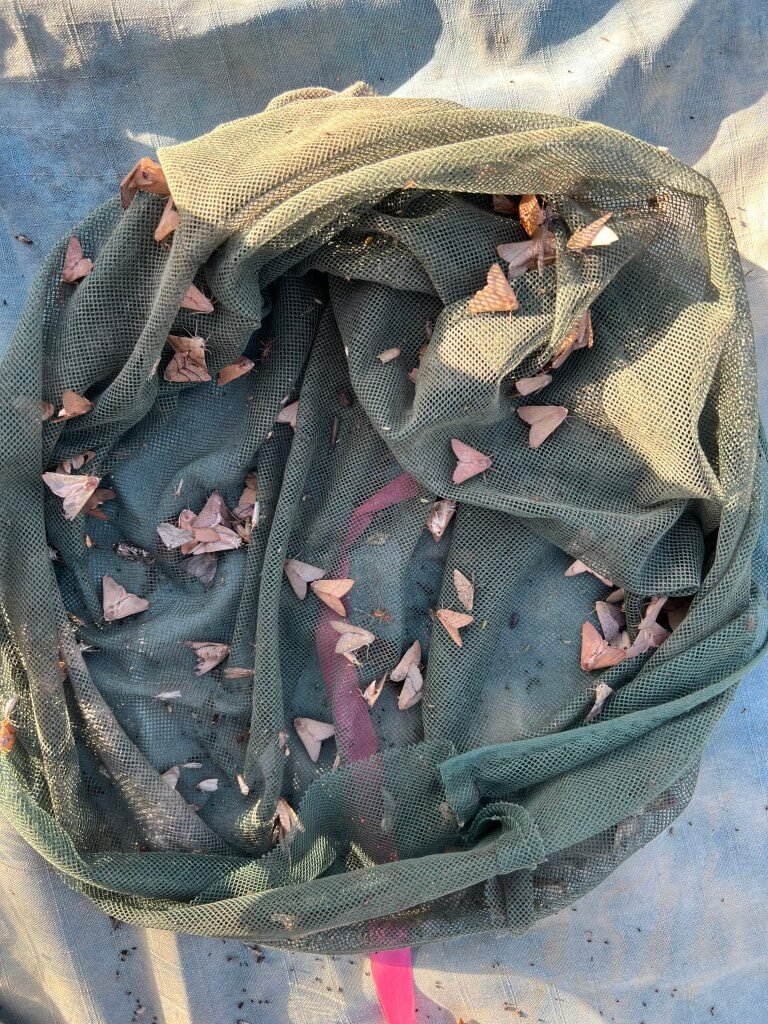
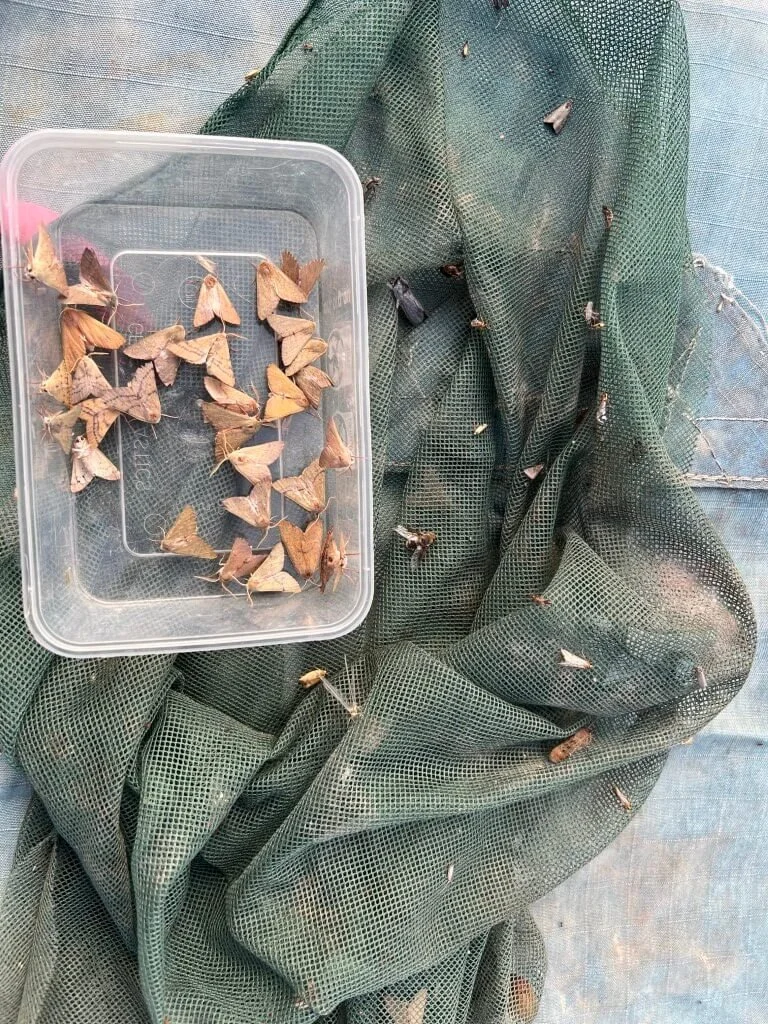
I used a large 20L bucket and lined the inside with a mesh bag. This gives the trapped moths plenty of space to hang about without bumping into each other and panicking. I found as long as they aren’t touching each other, they rest calmly in the trap. And in case you’re wondering, you can fit at least 370 moths in a 20L bucket, but it gets pretty busy counting them in the morning! There are 130 Mallee Looper (Arhodia sp.) moths in the bucket in the photographs below.
How to stop the beetles feasting on the trapped moths?
I’m not very good at sewing, so when I sewed my first bag I accidentally left a gap in the seam at the bottom. What an amazing invention! I had made a beetle separator!
Inside the mesh bag, moths climb up and rest on the walls of the bucket, whereas beetles climb downwards trying to get out. The hole in the bottom of the bag allowed the beetles to escape the bag and gather in the bottom of the bucket, keeping them separate from the moths tucked up inside the bag. This minimised any beetle-moth predation.
How to get the moths out of the trap?
The overnight temperature is important. I cleared my traps at first light when it is coolest. If the temperature was below 15oC the moths were very calm and I could simply pick them off the walls.
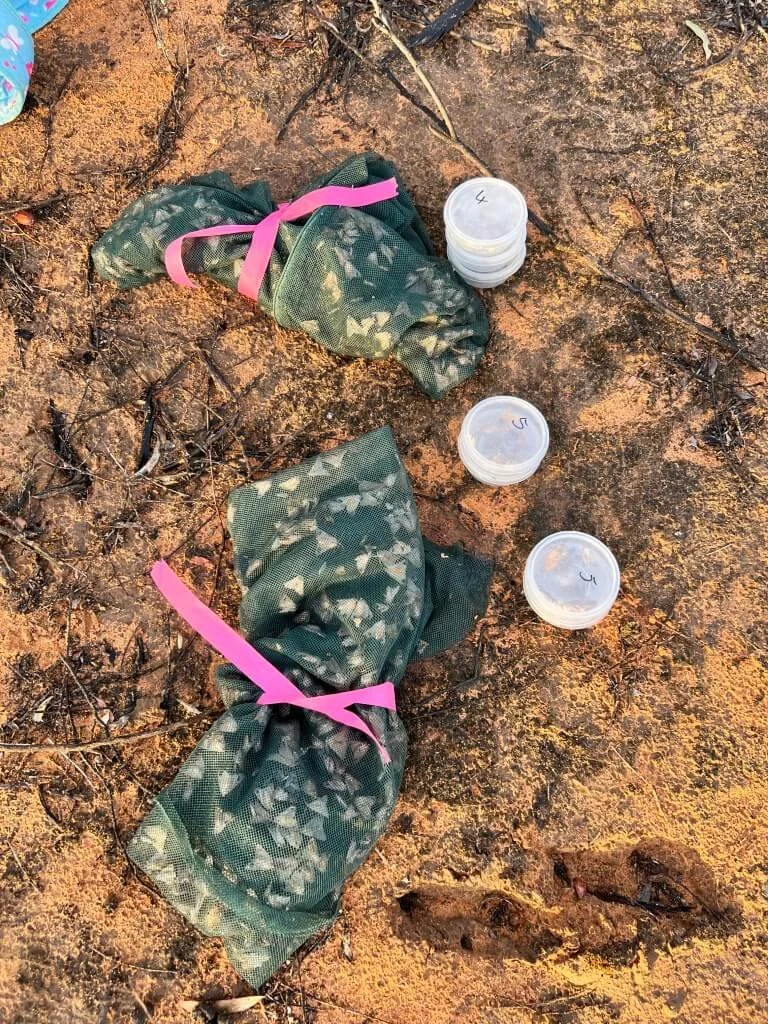
Temperatures of 16-25oC meant I had to bundle up the bags and put them in the car fridge to cool the moths down. Putting them in the fridge doesn’t kill them, just subdues them. This makes it easier to sort and count your catch. If there were lots of moths, or the morning was warm, I had to process the catch in batches, putting the bags back in the fridge several times as the moths became too active to handle.
If the overnight minimum temperature is forecast to be above 25oC, I try to avoid setting the traps at all unless it is absolutely critical. The moths don’t settle on very warm nights, and it is absolute chaos trying to clear the traps. Even after a period in the fridge, the moths quickly reawaken and start escaping again.
Birds and ants will also eat your moths
If you set your trap in the same location over several nights, the birds and ants will soon be attracted to feast on the moths.
Ants
It is horrible to find a bucket full of ants and many dismembered moths. You can put your bucket in a water dish (thanks Phil and Judy for that great idea) or try some fluon around the top of the bucket (this slippery coating can stop ants getting in). Otherwise you need to move your trap.
Birds
You know the saying about the early bird … well it is difficult to beat the early bird and they often get the moths. I found that shortly after daybreak the birds would move in and pick off moths that were resting on the outside of the bucket. Then they would hang around, waiting for me to open the bucket. When I opened the trap, the birds would fly around my head feasting on the insects as I released them. The only solution was to get up earlier. At one site I needed to clear the traps before daybreak, using a headtorch!
It felt unfair on the insects but I did have lots of lovely experiences with hungry birds. Jacky Winters and Willie Wagtails fluttering about my head. A Grey Shrike-Thrush foraging in the leaf litter where I had hidden the beetles emptied from the trap. A pair of Sacred Kingfishers taking moths to their nest in a tree hollow. A Grey Butcherbird feeding his baby. NO! Not the Christmas Beetle! And a particularly tenacious Striped Honeyeater trying to eat the Mallee Looper moths I had collected into tubs for further research. On two occasions my tubs were stolen by Currawongs. I had to chase after the birds until they dropped the tub full of moths!
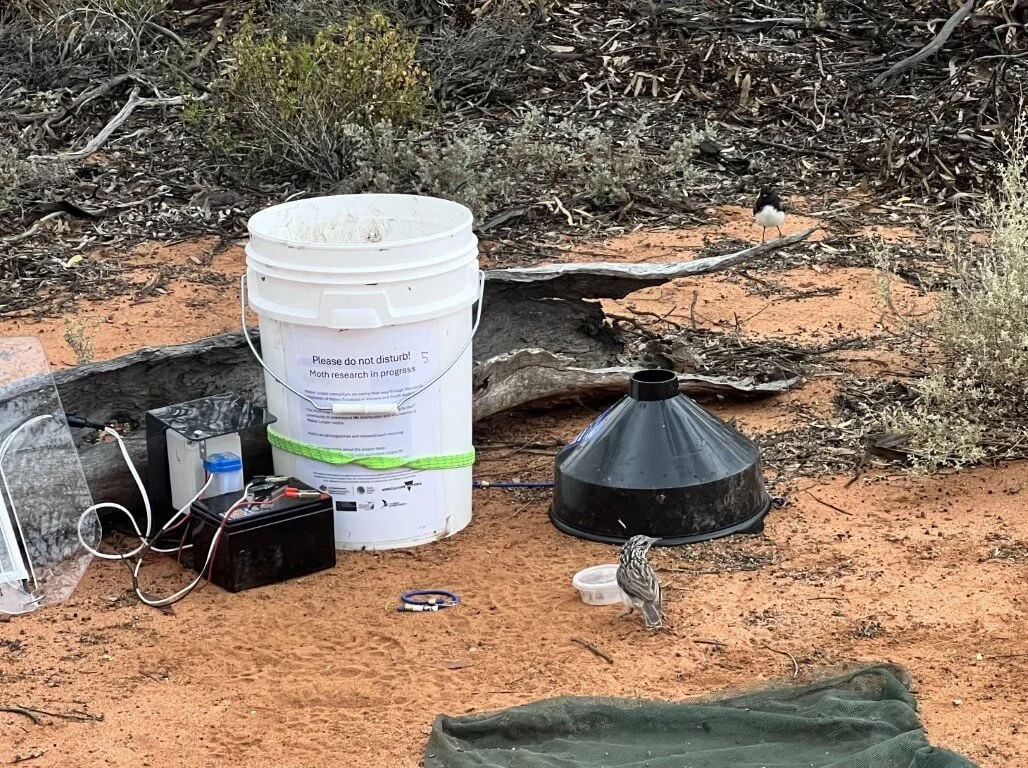
A Striped Honeyeater trying to get into the tub of Mallee Looper moths.
Will no-kill moth trapping work everywhere, for every species?
Probably not. I am trapping in the Mallee of north-west Victoria, it’s summer and the annual rainfall is les than 300 mm per year. If you’re in a tropical rainforest the volume of insects you catch could overwhelm the bucket. In this case you could try setting a timer so the light only comes on for a portion of the night.
You may also have trouble if you are researching other species. My Mallee Looper moths are quiet and lazy and totally pacified after half an hour in the fridge. Not so for other species. Tiny moths fly away quickly and I noticed that Bogong Moths (Agrotis infusa) are not phased by their time in the fridge. Straight out of the fridge they are able to quickly run (not fly) away.
But I reckon, it’s time we made every effort to make no-kill trapping the norm for insect research.
This project of the Regional Drought Resilience Planning program is jointly funded through the Australian Government’s Future Drought Fund, the Victoria Government and the Natural Resources Conservation Trust.