
370 moths in a bucket
For the first time, we have an understanding of the abundance of Mallee Looper moths in outbreak sites in the Victorian Mallee. What a trapping season it was! My best (worst) night involved counting 370 Mallee Looper moths in a single funnel trap!
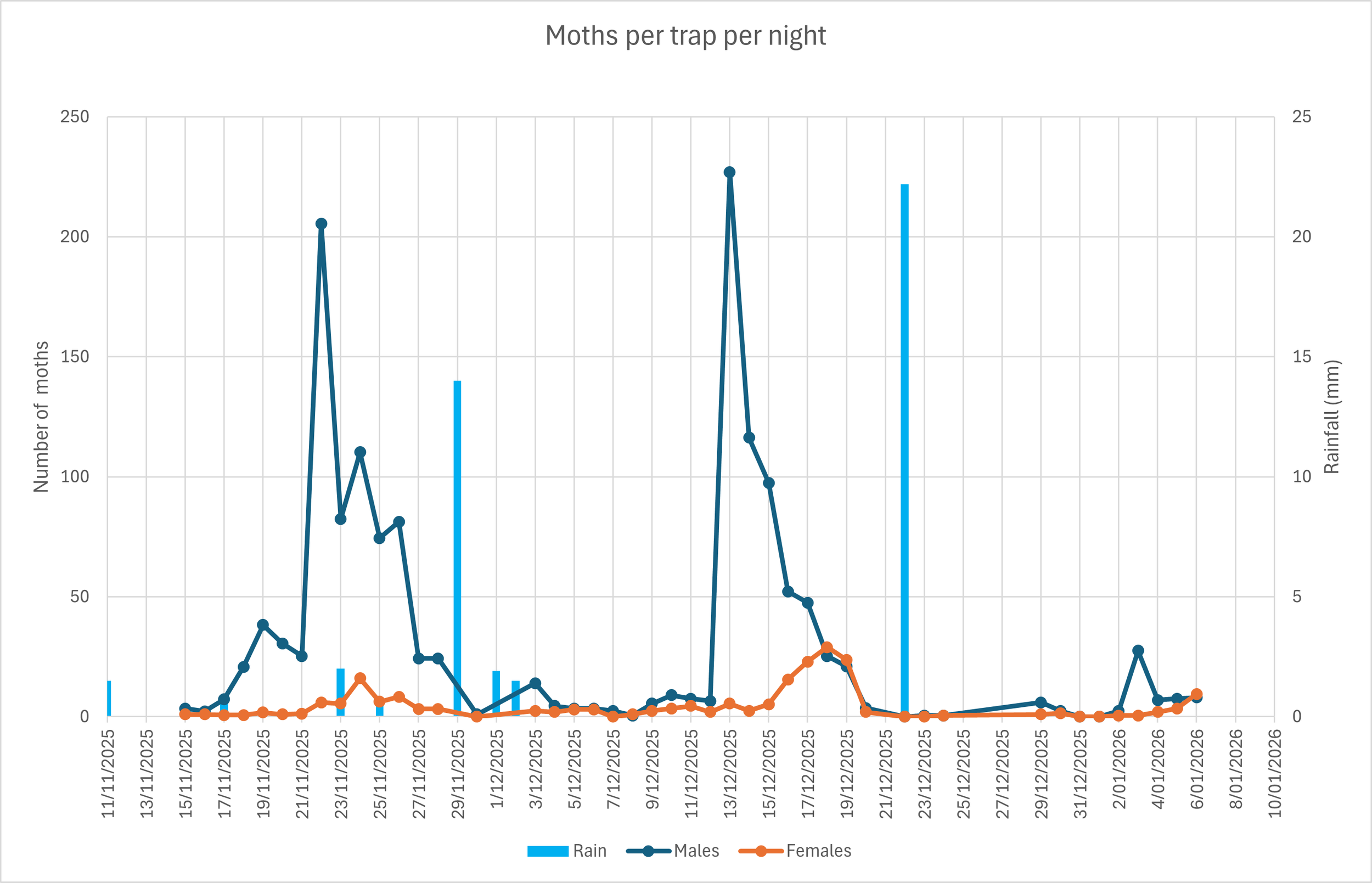
The average number of Mallee Looper moths caught per trap per night (averaged across four sites).
Outbreaks of Mallee Looper caterpillars
I am trapping Mallee Looper moths at five locations in and around Hattah-Kulkyne National Park in the Mallee of north-west Victoria. Four of these sites are “outbreak” sites. In early 2025, these sites experienced severe defoliation of Mallee Eucalypts by the Mallee Looper caterpillar. Not surprisingly, trapping show that this results in high numbers of moths the following Spring.
By high numbers, I mean 100-200 moths or more (up to 370!) in a single trap night during the peaks of emergence. In contrast, at the fifth site, which showed only minor defoliation by Mallee Loopers last year, the peak abundance was fewer than 20 moths.
Our trapping results align with reports from South Australia. Their trapping this year revealed similar peaks of abundance to Victoria - both size and timing. But in previous years (they’ve been trapping at the epicentre of the outbreak since 2022), the peaks have been higher. In 2023, the peak was 700 moths in a single night!
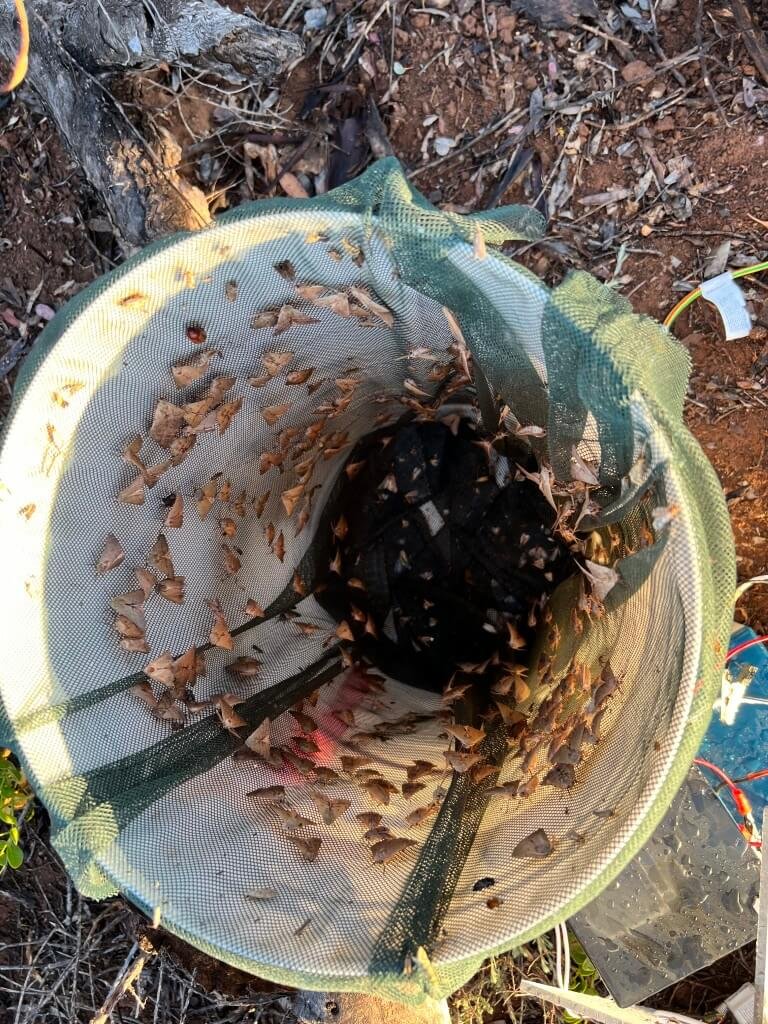
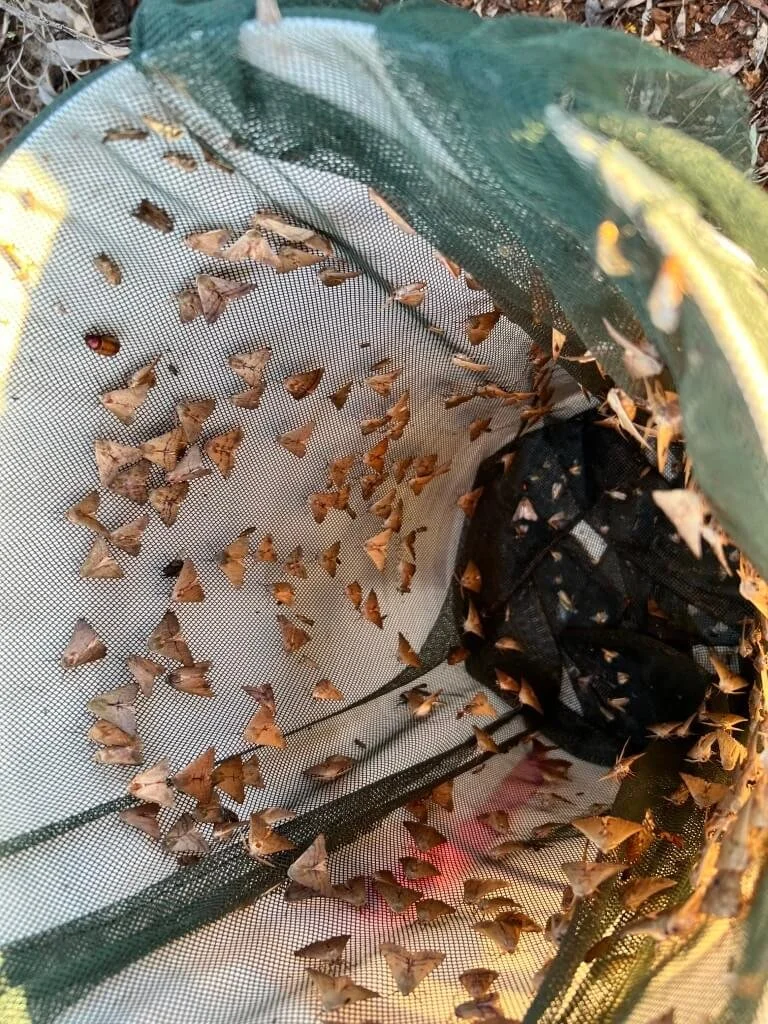
This is what 100 Mallee Looper moths in a bucket looks like. I was too busy to photograph 370 moths in a bucket!:
What causes synchronised peaks of emergence in moths?
Around February, Mallee Looper caterpillars descend the trees to pupate underground. There they stay, until emerging in November or December. Most of them emerge on exactly the same night! We saw the same peaks across a small spatial scale (10s of kilometers between my sites) as well as over much greater distances. The peaks in the Victorian Mallee were synchronised with the peaks in the South Australian Mallee. That is some flash mob.
So what triggers the synchronised peaks of emergence? Dunno.
From previous years, there seems to be some alignment with rainfall. Peaks of moths follow 10-14 days after rainfall (or looking at our trap data, maybe the moths can predict rainfall??). This year, the leading rainfall event on 11th November was tiny. Perhaps this resulted in a “false start” because this year was the first year we recorded a double peak, one around the 22nd November and the second around the 13th December 2025 after rain on the 29th November.
But there are all sorts of other potential triggers for moths to emerge from their pupae. Temperature, photoperiod, lunar phase, meteorological air pressure. And beyond the environmental cues, some moths are synchronised at the caterpillar stage, with caterpillars ceasing to feed and entering the pupal stage at the same time. SO much to learn.
Why is the sex ratio of moths skewed to males?
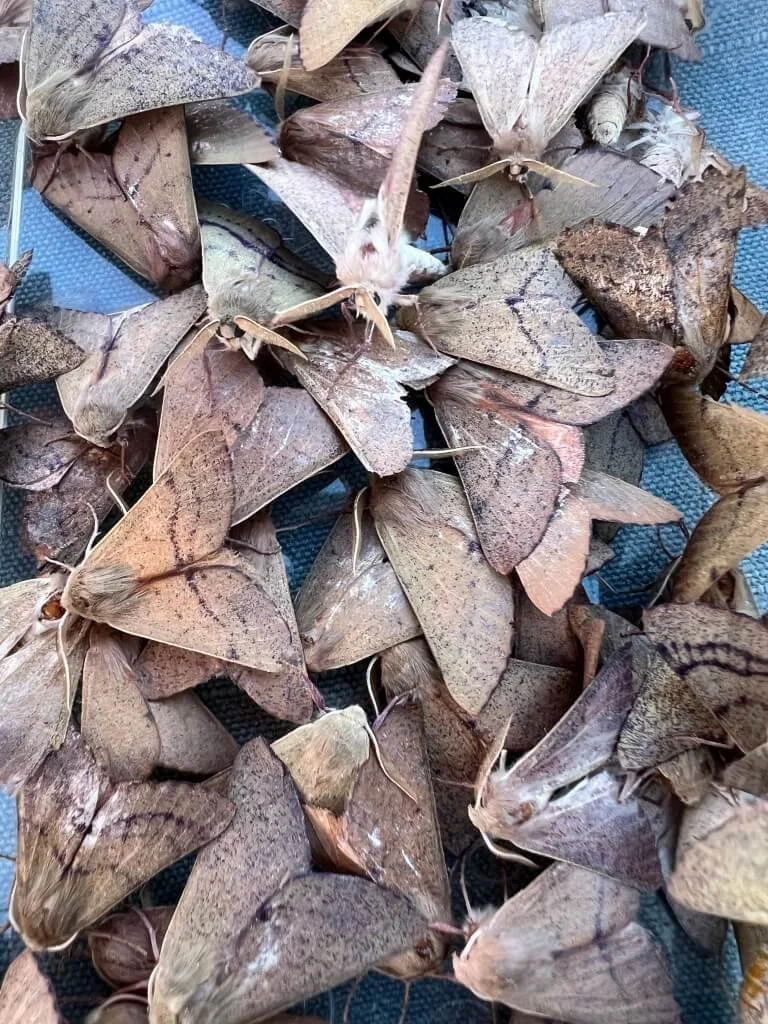
Our trapping caught many more male moths than females, sex ratios were often 30-40:1 in favor of the males. Male bias is not uncommon. Males are often more attracted to light traps and fly around more. But at one site in South Australia, females outnumber males by up to 30:1. Is this significant? Again, dunno. Another research Pandora’s Box.
And … moth trapping by citizen scientists generates more questions
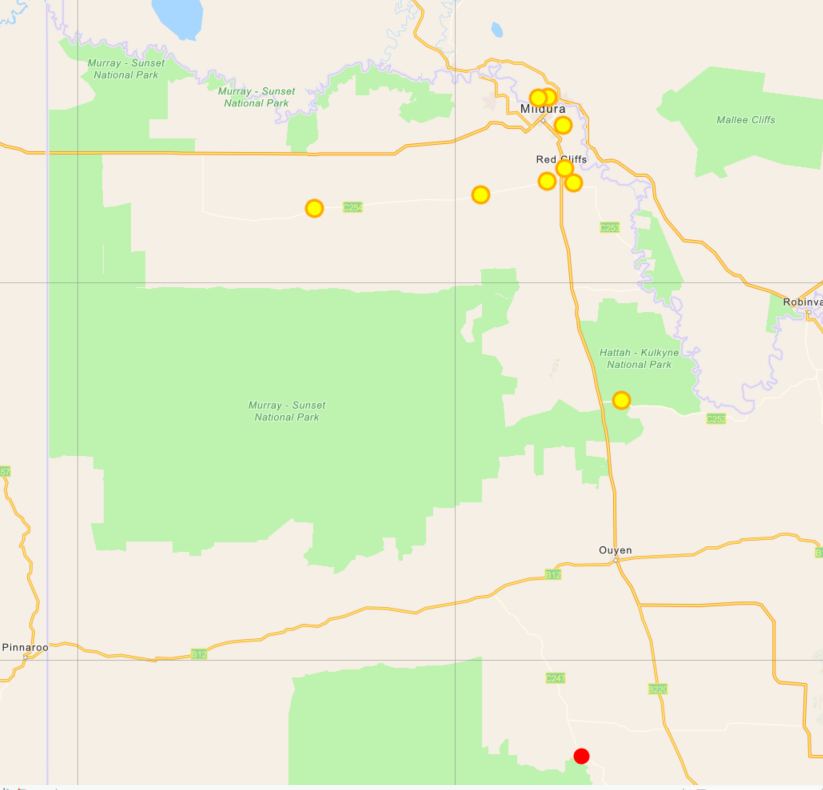
Our Mallee Looper research has been greatly assisted by the work of citizen scientists. These dedicated souls volunteered to set and check moth traps across the Victorian Mallee. Their work contributed trap data for an additional ten sites, with Mallee Looper moths trapped at nine of these locations (yellow dots).
Although I expected Mallee Looper moths to mainly be found in areas of Mallee Woodland, our trappers found them all over the place, including Riverine Woodland and urban backyards! These suggests that Mallee Looper moths have a high dispersal capability and might even indicate they can feed on Eucalypts other than the Mallee Eucalypt species. In captivity they have been reared on River Red Gum leaves.
This is turning out to be one of the most interesting research projects I’ve been involved in. I’m also enjoying the next phase - currently rearing hundreds of caterpillars to monitor food preferences and growth rate.
This project of the Regional Drought Resilience Planning program is jointly funded through the Australian Government’s Future Drought Fund, the Victoria Government and the Natural Resources Conservation Trust.