
Mallee Looper Alert
Just when we thought the Mallee trees had escaped being eaten by very hungry Mallee Looper caterpillars …
Word has come from South Australian Looper-watching volunteers, that on 15th March one of their light traps yielded 745 male and 609 female Mallee Looper moths! Sadly, it’s not an isolated occurrence. Our iNaturalist project “Looking for Mallee Loopers” has been inundated with moth observations, including our observations from Victoria.
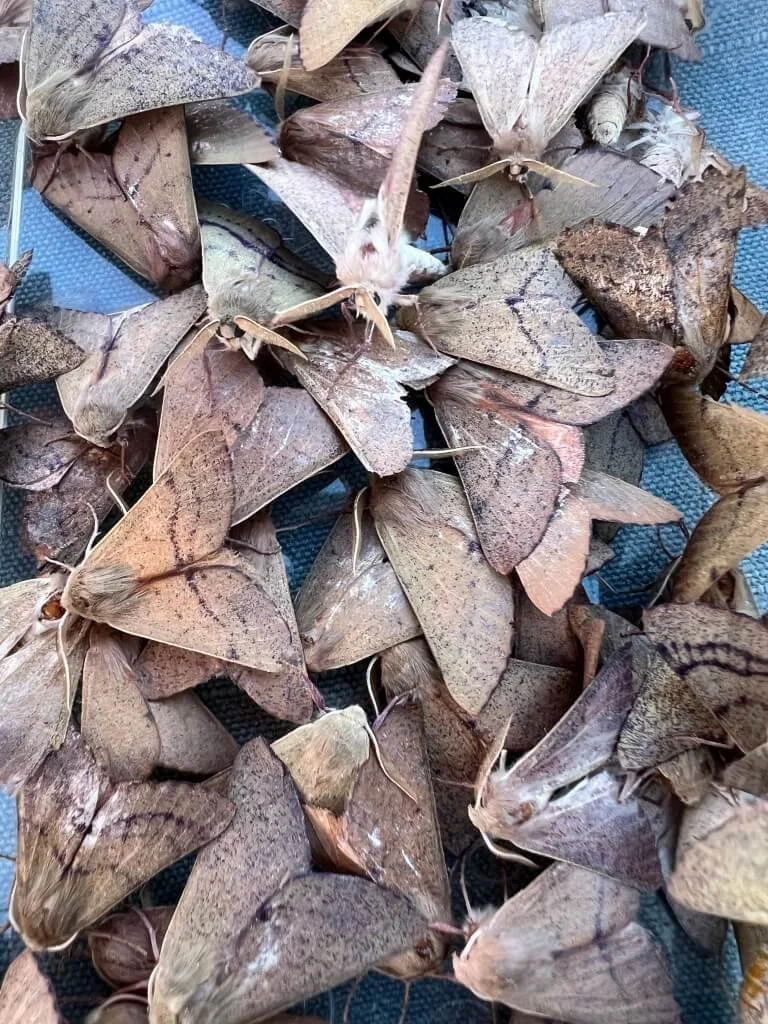
Where have the moths come from?
At the start of March, there was a very high rainfall event in the Victorian and South Australian Mallee. Many areas received half their annual rainfall in two days. It seems likely that this has triggered mass simultaneous emergence of Looper moths. It appears that Mallee Looper moths do not only emerge in Spring as we thought.
Where have these moths come from?
Are they another species of Arhodia moth, similar but not the Mallee Looper?
Have the caterpillars from the Mallee Looper moths that emerged in November / December 2025, pupated really quickly rather than overwintering underground?
Or perhaps, not all the Mallee Looper pupae emerged as moths in November / December, and some pupae were waiting for a rainfall event just like this one?
I say again, this is one of the most mysterious projects I have ever worked on.
Does this mean defoliation for the Mallee trees?
Too early to say. Assuming the caterpillars grow at the same rate as they did in summer (it might be slower in cooler weather), we could expect to see the hungry, late instar caterpillars around the 14-24th April onwards. Please report any observations of moths, caterpillars or defoliation to the iNaturalist project and stay tuned!
