
Mallee Looper research update
The Mallee Looper is a native caterpillar that is eating its way through thousands of hectares of Mallee Woodlands in Victoria and South Australia.
Read on for an overview of our research over 2025/26, or if you’d like you can watch the webinar. There’s also lots more information on the Mallee Looper Research Blog:
Trapping Mallee Looper moths
We expected the Mallee Looper moth to emerge from its underground pupa in Spring so we set no-kill moth traps throughout November and December in Hattah Kulkyne National Park. There were two peak emergence periods, and incredibly, high moth numbers in Victoria occurred on the same nights as high moth numbers in the South Australian Mallee. We think emergence is linked to rainfall (see: 370 moths in a bucket).
Citizen scientists also reported moths from locations across the Victorian Mallee, using their no-kill DIY moth traps.
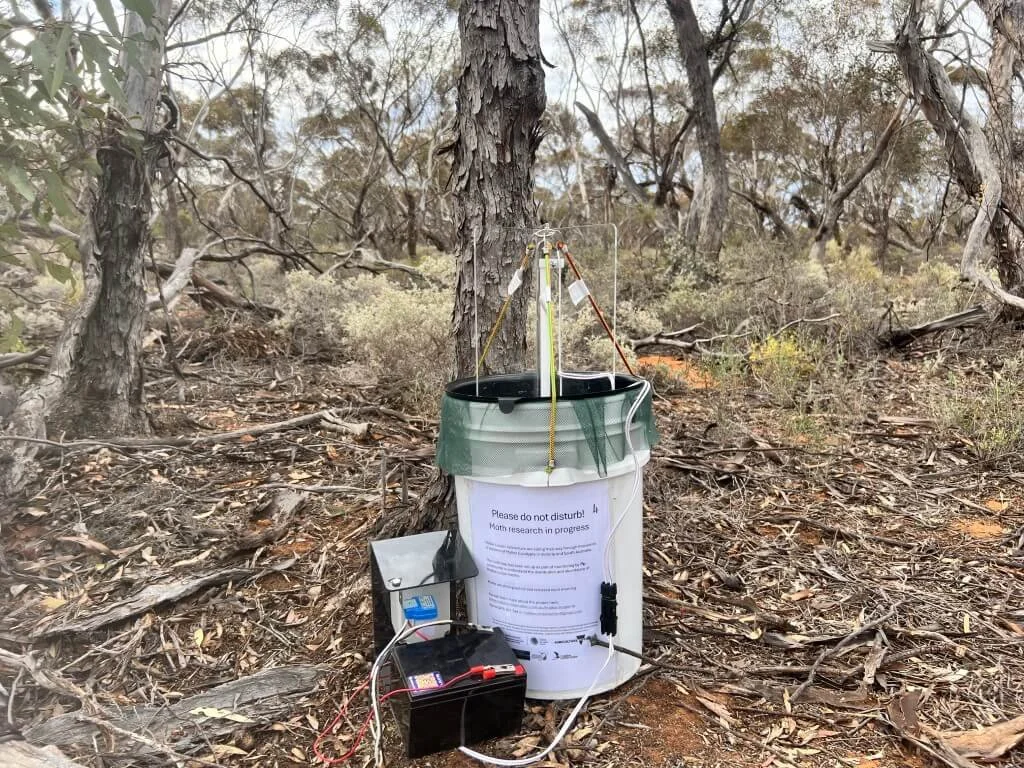
A no-kill bucket-and-funnel moth trap used to monitor emergence of Mallee Looper moths
Female moths lay lots of eggs
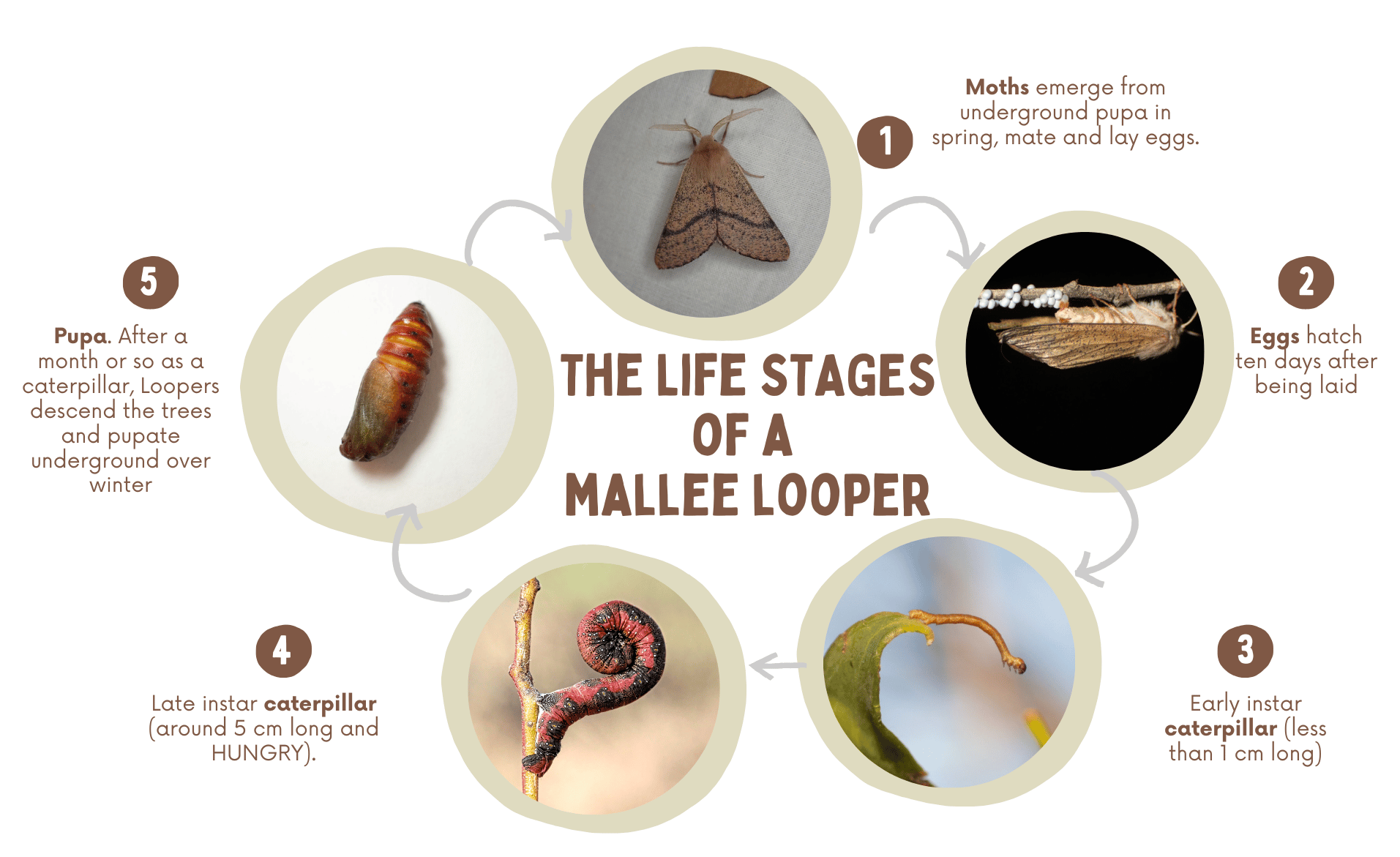
For the first time we have an understanding of just how many eggs a Mallee Looper moth lays. We counted eggs from more than 50 moths; finding females laid around 400-700 eggs per moth, but up to 966 eggs! That’s a lot of potential caterpillars, and gives us a clue as to why Loopers can become so highly abundant. Eggs take ten days to hatch. Thanks to Mark Hura from South Australia, this year we confirmed that when the tiny Loopers emerge from their eggs they disperse by ballooning away, using silk threads to catch the wind.
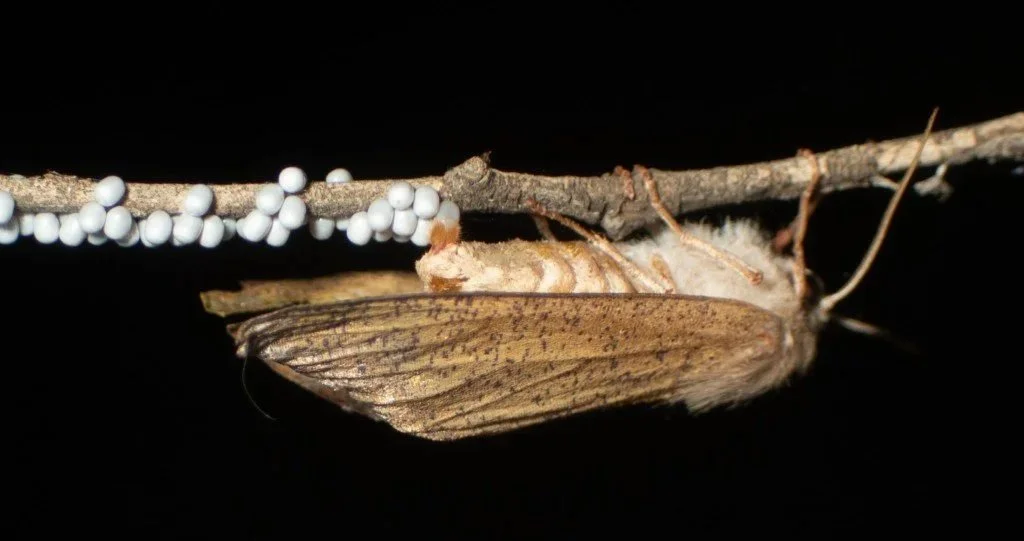
A Mallee Looper moth laying eggs on an exposed twig.
Caterpillars grow and eat for one month
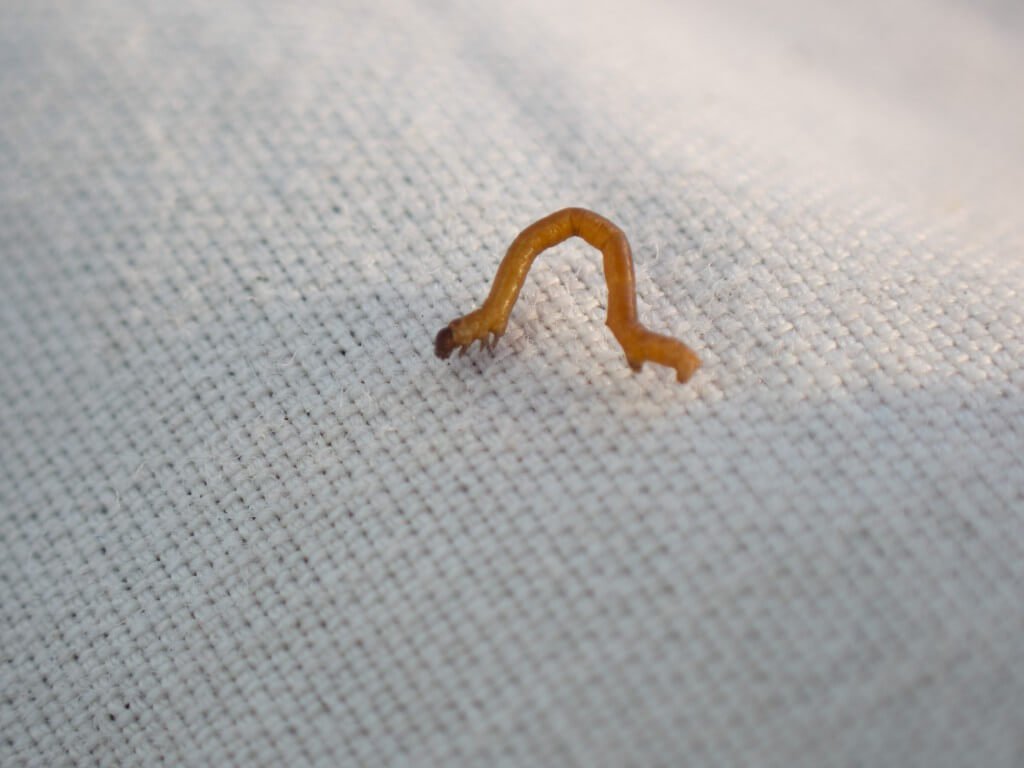
We reared caterpillars in take-away containers, feeding them daily on choicest leaf tips. We found the Mallee Looper has six growth stages (instars) before reaching maximum length (55 mm) around 32-35 days after hatching from the egg. The Loopers increase in size rapidly in the last two instars and that was when they were hungriest. Out in the bush, this would be the “very hungry caterpillar” stage when most damage and defoliation of trees would occur. We also figured out a handy size-age relationship based on the width of the caterpillar head capsule!
(See: Rearing caterpillars)

A late instar Mallee Looper caterpillar at the “hungry” stage. Image: Anthony Dominelli
But no damage this year?
Back in October we established monitoring sites so we could measure just how much of a tree canopy could be consumed by these very hungry caterpillars. Throughout December and January we wandered about, hitting trees with sticks (it is actually a scientific method called a “beat sheet”). But there were hardly any caterpillars.
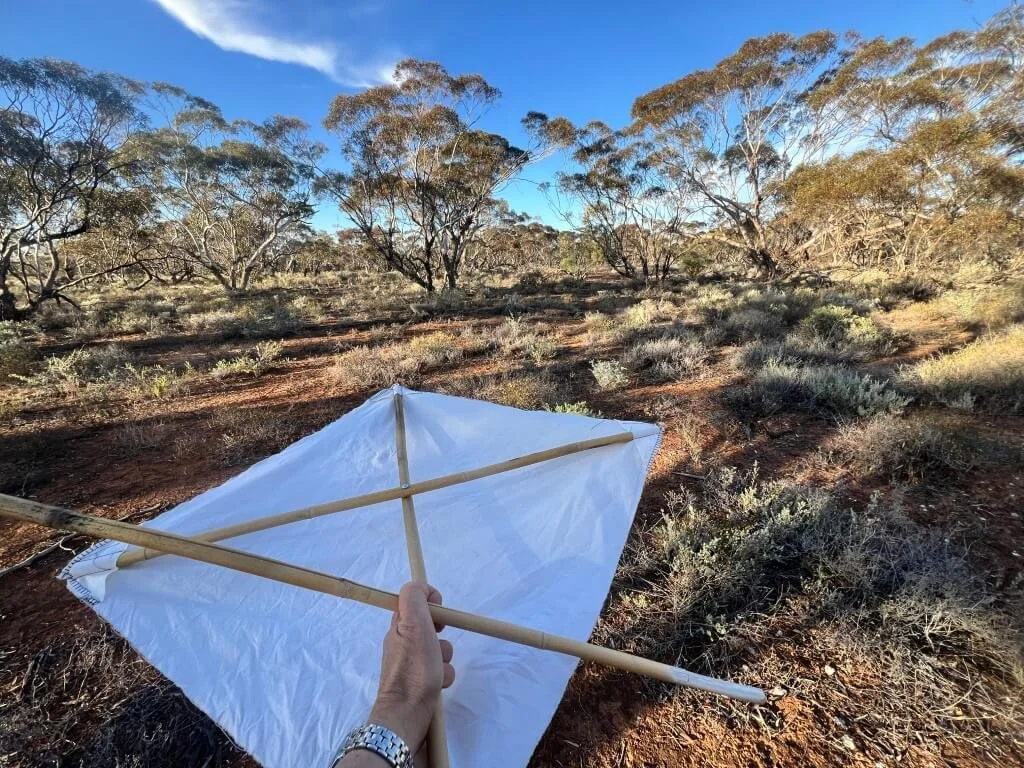
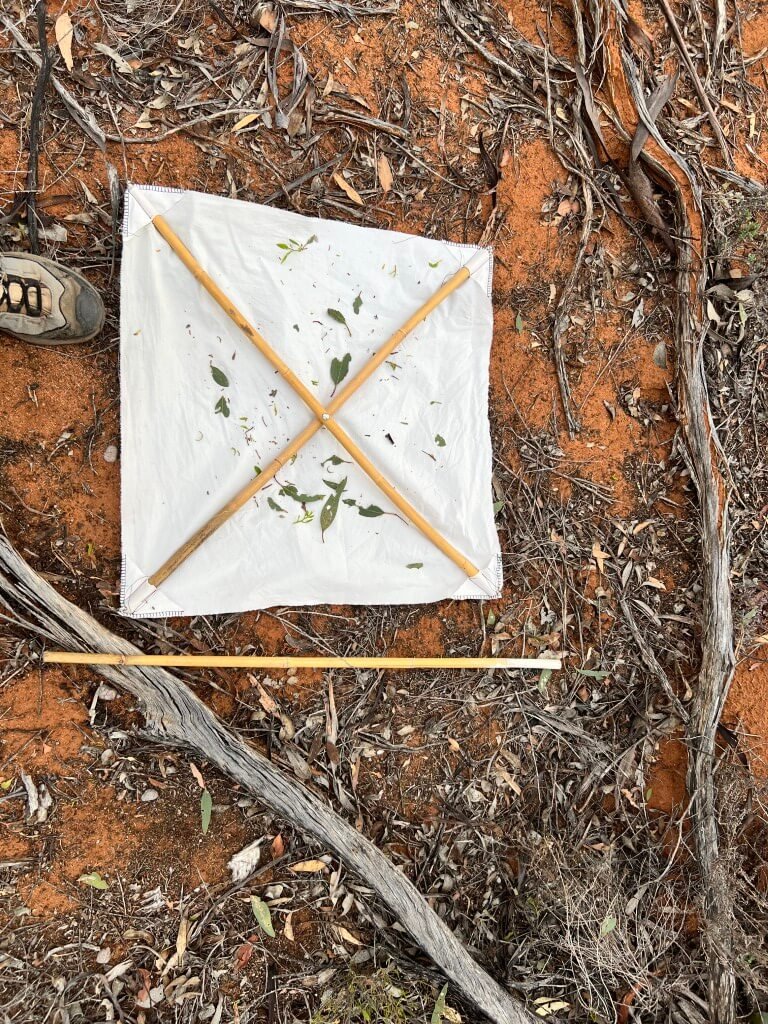
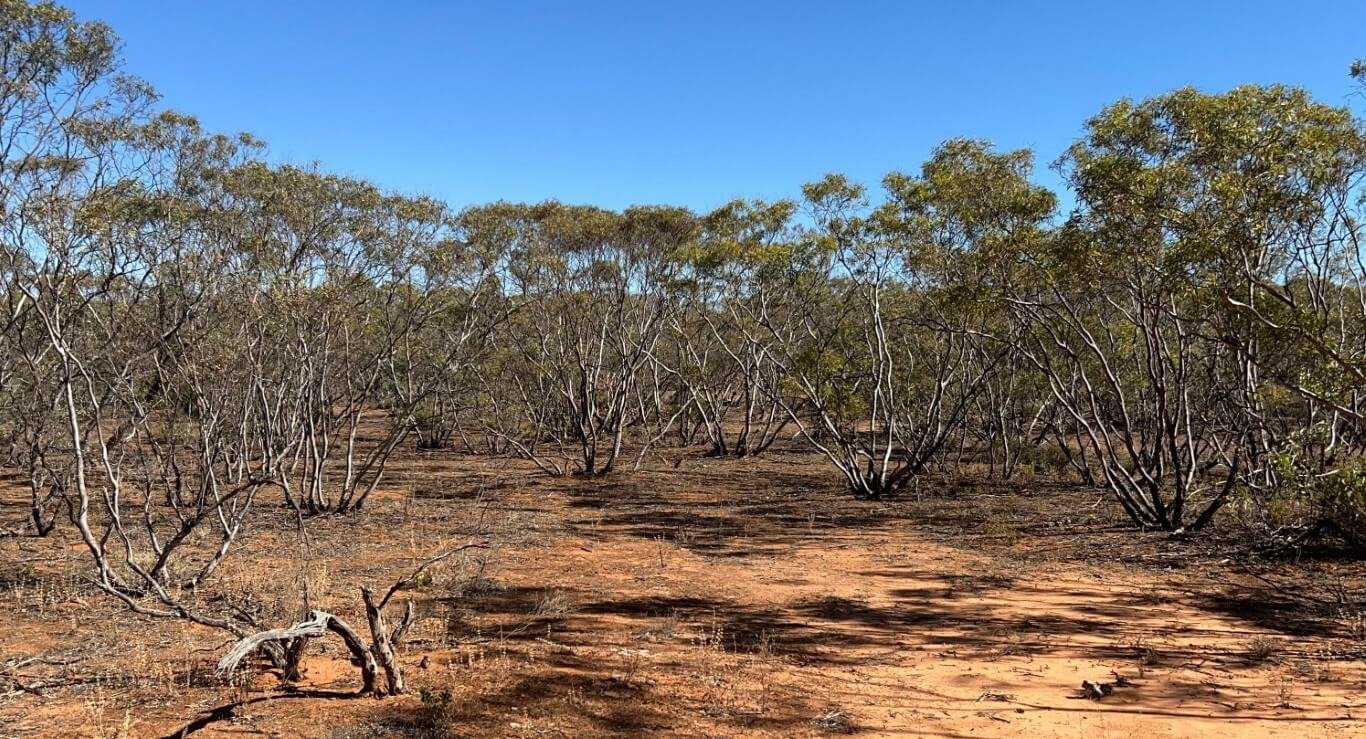
When we completed out defoliation assessments in February, we found there was no new defoliation and the trees impacted in 2025 had actually regrown their leaves! What had happened? We think that several heat waves this Summer wiped out most of the caterpillars.

Looper alert! Second and larger emergence of moths
But just when we thought we had escaped significant impacts from the Mallee Looper caterpillar this year … observers from across Victoria and South Australia reported high numbers of moths emerging in mid-March following the high rainfall event in early March. The incredible volunteers from Gluepot Birdlife Reserve counted 1354 moths in one trap! Oh my, that eclipses our record in December of 370 moths! (see: Mallee Looper alert).
Will this uncharacteristic, late emergence of moths result in late season defoliation of Mallee Eucalypts by Mallee Looper caterpillars? Join us on 29 April to find out.
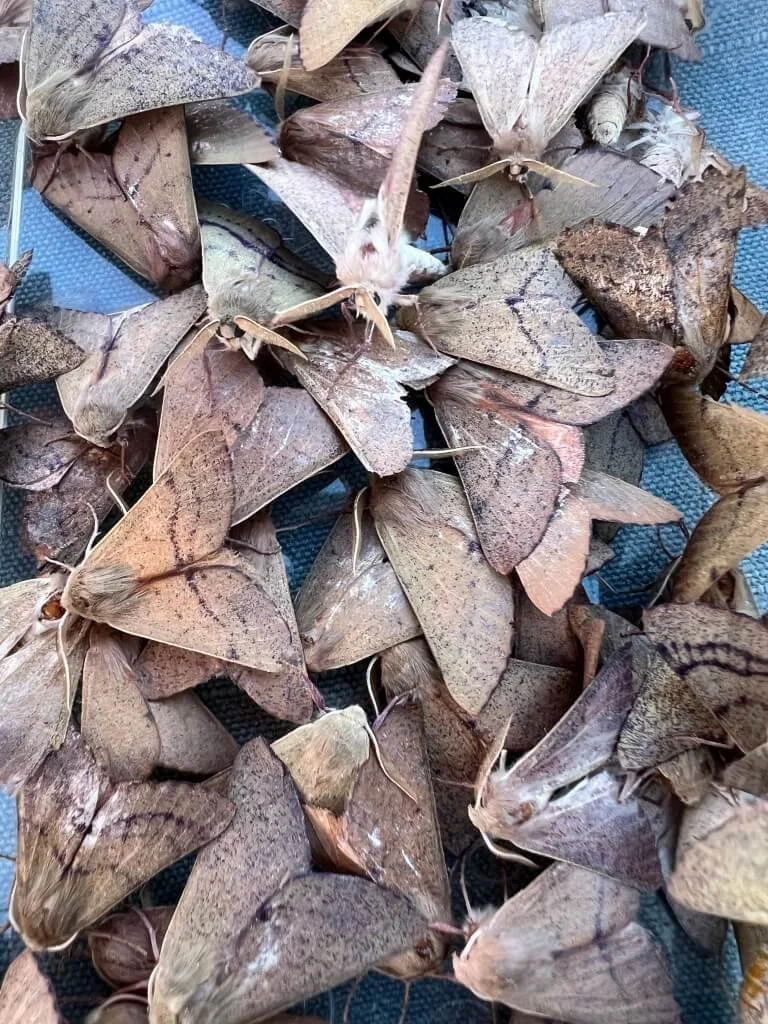
Lots of Mallee Looper moths caught in our no-kill moth trap.
Predators, pathogens and parasitoids
By mid-May the caterpillars from the March emergence of moths had finished eating and were heading underground. Interestingly, the cooler weather appears to have slowed down the growth of the caterpillars – taking about two weeks longer to reach pupation than caterpillars from the December emergence. This, combined with cooler and wetter weather, appears to have allowed some natural biocontrol agents to appear.
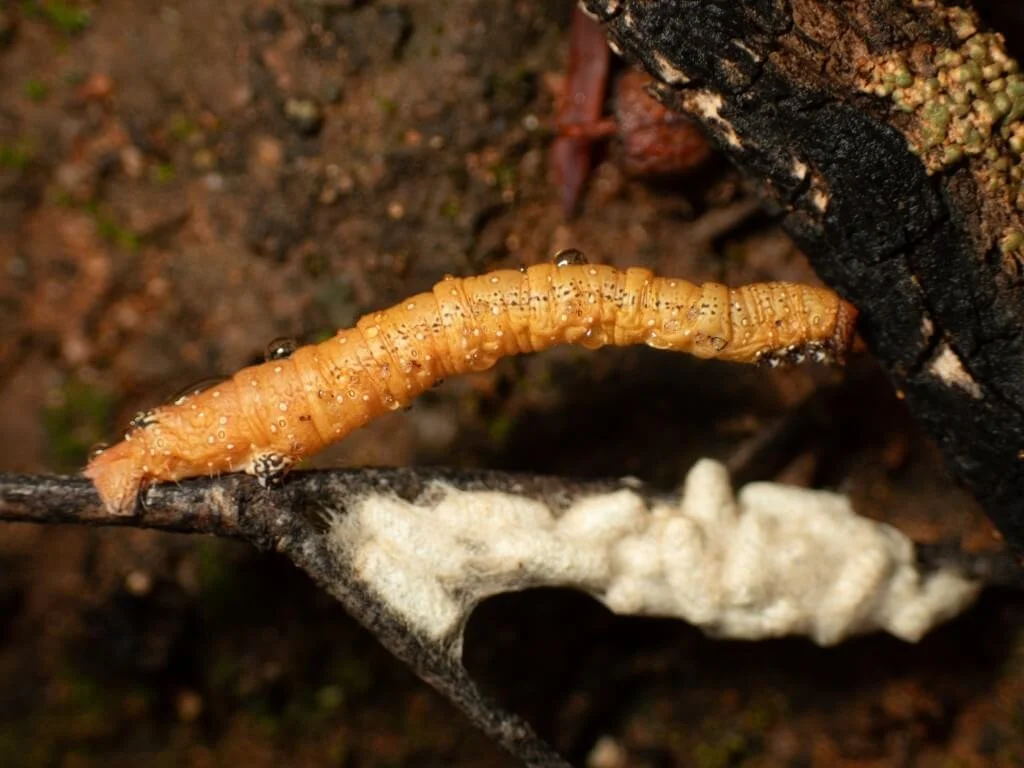
A Mallee Looper caterpillar acting as bodyguard to the cocoons of a Braconid wasp (possibly Cotesia sp.). The larvae of the wasp grew inside the body of this caterpillar. The caterpillar dies after the wasps emerge.
Active hope and the Looper Groupies
Active hope is shifting from expecting others to solve problems, to taking positive action ourselves.
Back in 2022, when defoliation of Mallee Eucalypts first became apparent, we didn’t know what was causing it. Now the collective efforts of many individuals and organisations are unravelling the Mallee Looper mystery.
I’d like to acknowledge the incredible research being undertaken by the Mallee Looper Groupies. For several years this collection of volunteers, ecologists, rangers, academics and entomologists from across South Australia and Victoria have been quietly working away making the discoveries that are building the story of the Mallee Looper. The Groupies are coordinated by the Murraylands and Riverland Landscape Board (special mention of Toby Galligan), with entomological advice from the incredibly experienced and knowledgeable Peter McQuillan. It includes researchers and volunteers at Birdlife Gluepot Reserve, Australian Landscape Trust Calperum Station, University of Adelaide student interns, and iNat legends like Ellura Sanctuary, Happy wonderer and Rhytiphora.
The contributions from Victoria have been made possible through partnership with Wildlife Unlimited and funding facilitated by the Mallee CMA and Natural Resources Conservation Trust.
This project of the Regional Drought Resilience Planning program is jointly funded through the Australian Government’s Future Drought Fund, the Victorian Government and the Natural Resources Conservation Trust.